How to address someone in Hungarian
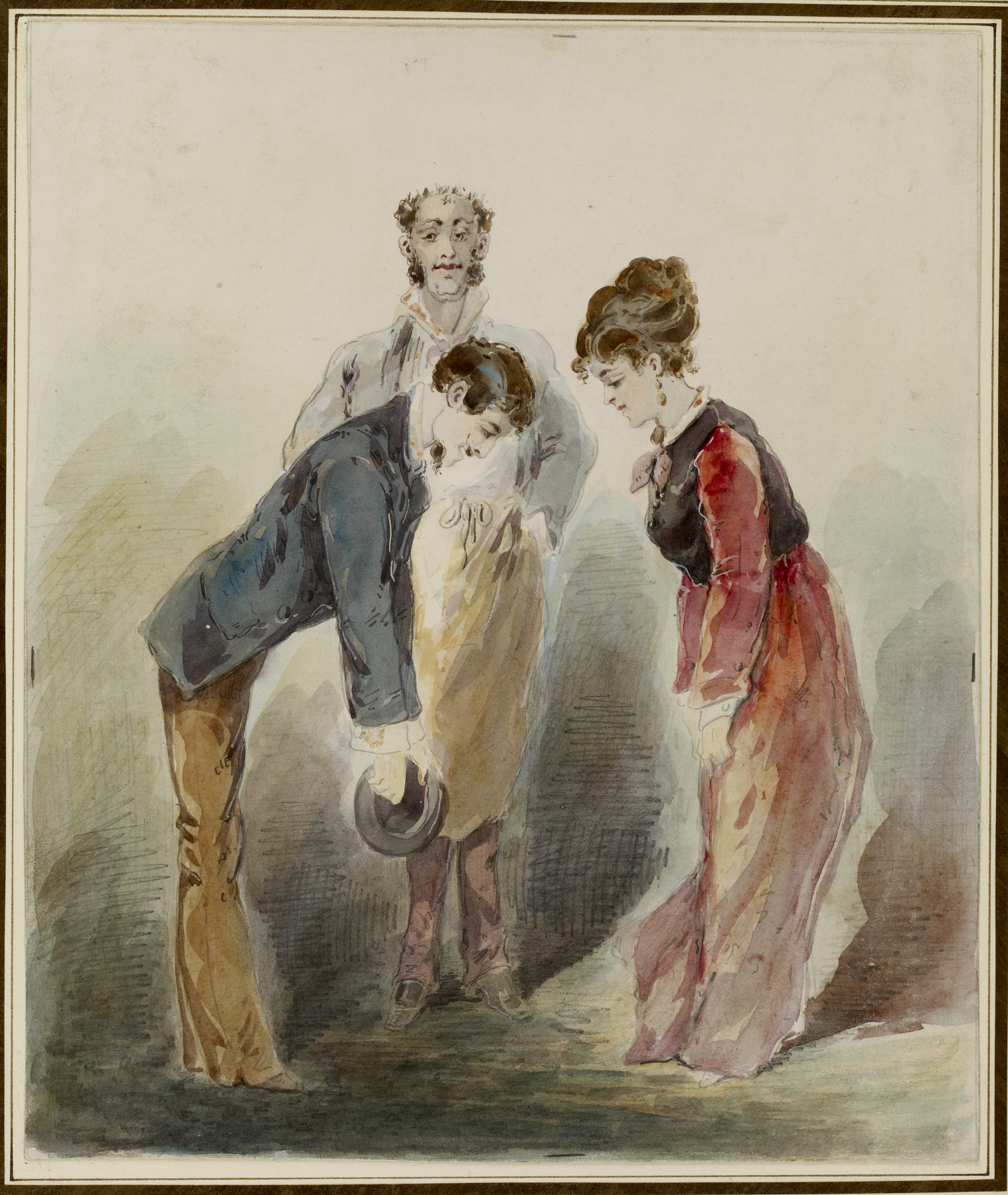 |
| Alfred Grévin: Man Bowing to a Woman (Source: Wikimedia Commons) |
I have been planning to write about this topic for a
long time, and finally here it is! Now I’m including only the casual, non-noble
forms of address in the Hungarian language – I’d like to cover the (complex and
sometimes difficult even for Hungarians) topic of Hungarian royal and noble
styles in another article. So let’s see how a person should be addressed in a
casual situation.
First of all, everything depends on the gender. Though
in many aspects the Hungarian language do bear resemblance to East Asian languages
(e.g. Japanese and Korean, where there are gender-neutral honorific suffixes
such as san in Japanese and ssi in Korean), Hungarian has no
gender-neutral honorific suffix. However, similarly to the Japanese and Korean
languages, the suffixes attach to the title or the family name of a person. For
example, when addressing a teacher (“tanár”),
we say “Tanár úr”, and when a director general (“főigazgató”), we say “Főigazgató úr”. In the case of names, the honorific
suffixes are attached to the family name, not to the given name – János KOVÁCS
is called “Kovács úr”, not “János úr” (though the latter may occur in certain cases)
–, or to the full name (“Kovács János úr”).
Now let’s see which suffix should be used depending on
the gender, marital status and age. Please note that in direct conversation we
almost always use the first person singular possessive form of the suffixes to
address our conversation partner.
1.
Úr (English equivalent: Mr. / Lord or Sir)
Gender: Male; Marital status: –; Age: adults
“Úr” is the general male honorific suffix in
Hungarian. To be honest, I cannot name any other suffixes for males – the other
ones, such as “nagyúr” (lit. “Grand Lord”) and “fiatalúr” (lit. “Young Lord”)
are all derivatives of “úr”. Direct conversation form: “uram”.
2.
Asszony (English equivalent: Mrs. / My Lady or Ma’am)
Gender: Female; Marital status: married; Age: adults
“Asszony” is the honorific suffix for married women.
When used for speaking about someone it’s equivalent to “Mrs.” in English,
therefore “Kovács(né) asszony” can be translated as “Mrs. Kovács” (the suffix “-né”
also expresses the marital status, but adding “asszony” makes it more polite). In
cases where the honorific suffix is attached to titles, “asszony” takes the
role of “úr’s” female form, regardless the marital status. Therefore “igazgató
úr” becomes “igazgató asszony” in every cases, and it doesn’t matter whether
the (female) Director is married or not. There are some exceptions, however, to
which “asszony” cannot be added: “tanár”
becomes “tanárnő” and not “tanár asszony”, “doktor” becomes “doktornő”
and not “doctor asszony”, etc.. There’re no grammatical reasons why you
cannot add the suffix and it’s not rude to say “tanár asszony”, it’s just
simply strange and unusual. Sometimes both “asszony” and “nő” can be used: in these cases, the “asszony”-form is more polite and is said when addressing someone (e.g. “miniszterelnök asszony”), while the “nő”-variant is often used to talk about someone (e.g. “miniszterelnöknő”, both meaning “female Prime Minister”) in a less formal way – though if you want to be really polite, you can use the “asszony”-form too to talk about people. In direct conversations the form is “asszonyom”.
3.
Kisasszony (English equivalent: Miss / My Lady or Mademoiselle)
Gender: Female; Marital status: unmarried; Age: young
adults
“Kisasszony” is the same as Mademoiselle in French. It
literally means “little madam” and therefore it is to address young, unmarried
women. Nowadays it’s rarely used in colloquial conversations due to the fact
that all forms of Hungarian honorifics were to be “deleted” from the language
during the Soviet era. After the regime change the honorific suffixes were reinstated,
but “kisasszony” somehow remained unpopular and a little bit old-fashioned. (Maybe because tegeződés became common between youngsters, and nowadays elder people also use tegeződés to youngers, instead of magázódás.) Personally
I really like this one and feel extremely honoured when someone calls me “kisasszony”.
Both “asszony” and “kisasszony” can be added to “úr”,
making them “úrasszony” and “úrkisasszony”, respectively. These forms are –
were, to be more exact – to call women from the nobility and are no longer used
in modern Hungarian.
4.
Hölgy (English equivalent: Ms. / My Lady, Mademoiselle or Ma’am)
Gender: Female; Marital Status: –; Age: adults
“Hölgy” is a somehow convenient form to address a
woman, as it represents neither marital status nor age restrictions. However,
it can be used only to address your conversation partner; attaching it to
titles is not possible (you cannot say “igazgató hölgy”). “Úrhölgy” is
the extremely polite and rarely used form of “hölgy”, which – just to make it
more complicated – can only stand with a full name (e.g. “Kovács Katalin úrhölgy”),
mainly in official documents (such as degrees and other certificates). Direct
conversation form: “hölgyem”.
Thank you for reading.
Alla

Köszönöm szépen! Egy Amerikai ferfitől
ReplyDeleteVery helpful! I don't want to seem a complete boob even in a bit of business correspondence.
ReplyDelete𝗬𝗼𝘂 𝗱𝗲𝘀𝗲𝗿𝘃𝗲 𝘁𝗼 𝗯𝗲 𝗵𝗮𝗽𝗽𝘆 𝘄𝗲 𝗮𝗿𝗲 𝗮𝗹𝗹 𝗵𝘂𝗺𝗮𝗻𝘀, 𝗮𝗿𝗲 𝘄𝗲 𝗳𝗿𝘂𝘀𝘁𝗿𝗮𝘁𝗲𝗱 𝗯𝗲𝗰𝗮𝘂𝘀𝗲 𝗼𝗳 𝗮 𝗕𝗿𝗲𝗮𝗸-𝘂𝗽 𝘁𝗵𝗲𝗻 𝘆𝗼𝘂 𝗰𝗮𝗻 𝘂𝘀𝗲 𝘁𝗵𝗶𝘀 𝘁𝗼 𝗮𝘁𝘁𝗿𝗮𝗰𝘁 𝘁𝗵𝗮𝘁 𝗵𝗮𝗽𝗽𝗶𝗻𝗲𝘀𝘀 𝗶𝗻𝘁𝗼 𝘆𝗼𝘂𝗿 𝗹𝗶𝗳𝗲. 𝗜𝘁 𝗯𝗿𝗶𝗻𝗴𝘀 𝗯𝗮𝗰𝗸 𝘆𝗼𝘂𝗿 𝗹𝗼𝘃𝗲𝗿, 𝗮𝗻𝗱 𝗵𝗲𝗹𝗽 𝘀𝗼𝗹𝘃𝗲 𝗯𝗿𝗼𝗸𝗲𝗻 𝗺𝗮𝗿𝗿𝗶𝗮𝗴𝗲𝘀. 𝗟𝗶𝗳𝗲 𝗶𝘀 𝘁𝗼𝗼 𝘀𝗵𝗼𝗿𝘁 𝘁𝗼 𝗯𝗲 𝘂𝗻𝗵𝗮𝗽𝗽𝘆. 𝗧𝗵𝗶𝗻𝗸 𝗮𝗯𝗼𝘂𝘁 𝘁𝗵𝗮𝘁. 𝗬𝗼𝘂 𝗱𝗲𝘀𝗲𝗿𝘃𝗲 𝘂𝗹𝘁𝗶𝗺𝗮𝘁𝗲 𝗵𝗮𝗽𝗽𝗶𝗻𝗲𝘀𝘀 𝗮𝗻𝗱 𝗹𝗼𝘃𝗲. 𝗡𝗼𝘁𝗲: 𝘁𝗵𝗶𝘀 𝗶𝘀 𝘁𝗼𝘁𝗮𝗹𝗹𝘆 𝗵𝗮𝗿𝗺𝗹𝗲𝘀𝘀 𝗮𝗻𝗱 𝗵𝗮𝘃𝗲 𝗻𝗼 𝘀𝗶𝗱𝗲 𝗲𝗳𝗳𝗲𝗰𝘁𝘀.𝘁𝗵𝗶𝘀 𝗶𝘀 𝘁𝗵𝗲 𝘀𝗼𝗹𝘂𝘁𝗶𝗼𝗻
ReplyDelete👇🏻👇🏻
What'sApp 2348153622587
Oseremenspelldr@gmail. com
FINALLY I GOT MY LOST BITCOIN BACK ALL THANKS TO TSUTOMU SHIMOMURA
ReplyDeleteHello everyone I want to use this Medium to say big thank you to TSUTOMU SHIMOMURA for they helped me recover my stolen crypto worth $285,000 through their hacking skills I tried it I was skeptic but it worked and I got my money back, I’m so glad I came across them early because I thought I was never going to get my money back from those fake online investment websites . You can also contact them by Email address tsutomushimomurahacker@gmail.com, or WhatsApp +1 (806) 283-5031 Telegram +1 (803) 632-0791 and I’m sure you will be happy you did.
ReplyDeleteRECOVERY.....
I NEED A HELP HOW TO RECOVER MY LOST CRYPTOCURRENCY
I know many things could have gone wrong these past few days investing online and getting burnt. I was also in your shoes when I invested in a binary option where I got scammed of $300,000 of BTC but thanks to the help of TSUTOMU SHIMOMURA They assisted me in recovering back my lost BTC. I initially didn’t trust them but I was referred to by a friend who I trust well. I was able to get my refund within the space of 48HRS . Thanks to TSUTOMU SHIMOMURA, you can also contact them by Email tsutomuhimomurahacker@gmail.com Or Telegram +1 (803) 632-0791 and I’m sure you will be happy you did.